People have been reporting strange lights and craft in the sky for decades. Some stories include sounds. Others don’t. 

The idea of aliens, or at least unidentified objects, has always sat somewhere between curiosity and skepticism. Most reports never get explained in a way that satisfies everyone. A few leave behind audio.

Sound is what makes these stories stick for many people. A bright light can be a plane, a balloon, or a satellite. A sound that doesn’t match any known engine is harder to dismiss on the spot. That is why recordings matter, even when the cases themselves remain unresolved.

What People Actually Report Hearing

Witnesses rarely describe ordinary aircraft noise. The common descriptions are low, continuous hums; warbling or oscillating tones; high-pitched modulated whines; and electronic-sounding drones that change pitch slowly. Some compare it to a distant power station mixed with a metallic screech. Others say it felt like something mechanical but not mechanical at the same time—smooth, unnatural, and hard to place.

These are not the sharp jet sounds or helicopter chops most people know. They tend to be deeper, more continuous, and less clearly mechanical. In fiction and sound design, that same territory gets used: layered drones, slow pitch movement, filtered noise, and tones that refuse to settle into something familiar.

A Couple of Recorded Cases

One of the better-known audio examples comes from Redlands, California, in February 1968. A disk-shaped object was seen by many people. At the same time, a minister recording his church service picked up a high-pitched, modulated warbling sound in the background. Later analysis compared it to a nearby emergency vehicle siren. Some features of the recording did not line up cleanly with a normal siren, which is why the case still gets discussed.

Another case that produced an actual recording happened near St. Helens, Oregon, in March 1981. Police officers and a civilian on the other side of the Columbia River watched a very bright light low over the water early in the morning. One of them transmitted the sound through a CB radio while officers recorded the conversation on a portable tape recorder. The sound is often described as a heavy, diesel-like rumble with a higher screeching or warbling element on top. The object was seen by multiple people; the Coast Guard searched the area and found nothing. The tape has been analyzed over the years, but no consensus explanation has settled it.

These are not the only examples. There are other older reports of unusual sounds accompanying sightings. Clear, high-quality recordings remain rare. Modern official UAP reports from government sources tend to focus on visual and radar data more than audio. That leaves a gap between the stories people tell and the clean evidence most people want.

Where Alien and UFO Sound Effects Come From Today

Almost none of the alien sound effects used in films, games, or videos come from real UFO recordings. Sound designers build them. The usual approach is synthesizers, processed field recordings, layered drones, pitch modulation, and noise that has been filtered or warped until it no longer sounds like anything ordinary. The goal is the same one the old witness descriptions point toward: something that feels electronic and unstable without being immediately identifiable.

You can find these sounds in a few places:

  • Free libraries such as Freesound or older sites like SoundBible contain user-uploaded clips. Quality and licensing vary widely. Some are usable for personal projects; commercial use often needs checking.
  • Stock libraries sell ready-made royalty-free packs. These range from small collections of creature vocals and ship hums to larger sci-fi libraries.
  • Many people design their own. A few basic oscillators, some slow LFOs for movement, a bit of noise, and careful filtering can get you surprisingly far.

The practical difference is consistency and rights. Free clips are convenient for experiments. Paid, clearly licensed sounds are safer when a project is going out publicly or commercially.

Common Uses

Alien and UFO-style sound effects show up in more places than pure sci-fi films. Game developers use them for enemy creatures, ship interiors, ambient world sounds, and attack effects. Filmmakers and trailer editors reach for low drones and sudden warbles to sell unease or scale. YouTube channels covering space, mystery, or science topics use short clips as atmosphere. Podcasters and documentary makers occasionally drop in a short hum or signal-like sound when discussing the topic. Even some music producers sample or process these textures for electronic tracks.

The most useful sounds tend to be the ones that sit in the background without fighting dialogue, or the shorter, more aggressive ones that mark a moment (a flyby, a door, a creature reaction).

Alien Sound Effects on Pond5

I design and release sound effects focused on sci-fi, industrial, and otherworldly material. On my Pond5 store you can find collections of alien-related sounds: creature vocals and screams, atmospheric drones, machine and interface textures, cosmic ambiences, and related sci-fi effects. These are built from synthesizers and layered processing rather than field recordings of real machinery. The results are meant to work in films, games, trailers, and other media where you need something that feels off-world without sounding like a stock “spaceship noise” everyone has already heard.

The store is here.

You can search within the sound effects for alien, sci-fi, creature, or related terms to narrow it down. The clips are royalty-free for commercial use once licensed through Pond5.

Real UFO audio remains scarce and contested. The sound effects people actually use in projects are almost always designed. If you need something that matches the older descriptions, low, shifting, not quite mechanical or you want creature and atmosphere material for a sci-fi project, designed libraries are the practical route. The old recordings are interesting to hear. The new ones are what most people end up dropping into their timelines.

Image

Futuristic Printer Sounds on My Official Pond5 Store

Most people still hear a printer and think of an office. Paper, a tired motor, that little pause before the page comes out. I kept that memory, then pushed the machine about fifty years forward. The futuristic printer sounds on my official Pond5 store, hewlaq, are built for scenes where a document is not just paper. It might be a clearance slip in a spaceport, a warrant printing itself in an anime police office, or a lab report crawling out of a machine that has opinions.

I have been on Pond5 since 2021. The page is mostly sound design, with a smaller share of recordings, and the work sits in sci fi, industrial, and mechanical territory. These printer files follow the same habit. I do not own a printer from the future. Nobody does. I build the behavior with tools I have used for years, mainly Sylenth1 and Serum, starting from simple waves and noise, then layering until the machine feels occupied. A sine wave can become the rail. A little noise can become the head. Slow movement keeps it from sitting still like a loop someone forgot to finish.

A real printer has stages, and I kept that idea. There is the wake up, when the servos find their place and the housing gives a short answer. There is the travel of the head, quicker than an old inkjet, with a dry tick at each end of the line. There is the feed, which may not be paper at all. In some files it feels like a thin sheet. In others it feels like a film, or a plate, or something the story never names. Then there is the finish, the small release when the job is done and the machine settles into idle. Idle matters. A lot of stock printers stop when the page stops. A room does not. The hum stays, lower, waiting for the next order.

I also made the faults, because stories live there. A jam in this set is not a comedy beep from a cubicle. It is a head that loses its count, a feed that catches, a short electrical complaint, then a retry. You can drop that under a close up and the audience understands the machine failed without a line of dialogue. You can also leave the clean pass under a wide shot of a control room and nobody will notice the sound on purpose, which is usually the point.

Each file is its own pass. I do not take one master and pitch it three times. One sound might be a cold start in a quiet lab. Another might be a fast batch job with the head working harder. Another might be the soft chatter of a unit mounted in a wall, heard from the corridor. That difference is what I want when someone is cutting a sequence and needs the printer to change state, not just get louder.

Quality is plain on purpose. The files are high quality, 24 bit, 48 kHz, with no upscaling and no squash before upload. I check them on laptop speakers, studio monitors, and phone earbuds, because that is where they actually get used. If the head travel disappears on a phone, it is not finished. If the low body of the machine only exists on big monitors, it is not finished either.

They are royalty free in the way Pond5 means it. You license the sound, you are covered, and you do not owe a credit, though I never mind one. The Pond5 license is built for real work. Movies, animation, anime, video games, online ads, YouTube, apps, trailers, jingles, student films, the lot. A feature can use the same wake up that a short anime uses for a background gag. A game can loop the idle under a terminal while the UI plays the short confirm on top. Nothing in the file locks you to one medium.

If you are searching the store, open my page and search printer. The official storefront is pond5.com/artist/hewlaq. The rest of the library is there too, reactors, alarms, interface noise, creatures, weather, whatever the cut needs next. This pass is the printer. It should sound like a machine that still has a job, even when the room around it is no longer an office.

Creating realistic tornado sound effects requires far more than a simple wind recording. A convincing tornado is built from multiple layers that work together to reproduce the immense power of a severe storm. Deep rumbles, aggressive wind movement, swirling debris, and turbulent textures all contribute to the final result. Each layer serves a specific purpose: the wind provides continuous motion, debris introduces sudden impacts, and the low frequencies deliver the force and weight associated with a powerful tornado.

The Characteristics of Realistic Tornado Audio

Real tornadoes produce a broad range of frequencies. Massive air movement generates powerful low-end energy. Mid-range tones occur when strong winds interact with buildings, trees, and other structures. High-frequency elements often come from debris spinning and colliding within the vortex. Together, these elements create the chaotic and unmistakable sound associated with severe storms.

The tornado sound effects in this collection are entirely created using virtual analog synthesizers, specifically Xfer Serum and Sylenth1. Every sound has been carefully designed and refined to achieve a realistic result. Through advanced synthesis techniques, modulation, layering, and detailed processing, these presets recreate the intensity and complexity of extreme weather while remaining clean and ready for professional use.

A Sound Library Prepared for Professional Use

This collection offers a wide variety of tornado-related sound effects ready for immediate use. Inside, you will find powerful wind roars, storm ambiences, debris textures, and other cinematic elements. All files are supplied in professional WAV format, ensuring high-quality audio suitable for modern production workflows.

These sounds are suitable for many different applications. Filmmakers can use them to increase tension during disaster scenes. Game developers can create immersive weather environments. Documentary producers can add believable storm atmospheres, while trailer editors can introduce dramatic energy and impact.

Podcasts and audio dramas can use these storm textures to establish realistic settings. Educational content focusing on meteorology or severe weather can also benefit from authentic-sounding examples. Any cinematic or atmospheric production can gain additional depth and realism through carefully designed storm audio.

The Value of Professionally Designed Sound Effects

Recording authentic tornado audio is beyond the reach of most creators. Severe weather is dangerous, unpredictable, and extremely difficult to record under controlled conditions. Even when recordings are available, obtaining clean and usable material can be challenging.

Professionally designed sound libraries solve these problems. They provide production-ready audio created with attention to detail, proper frequency balance, and realistic movement. Carefully crafted sounds blend naturally into a mix, allowing creators to spend more time on storytelling and less time experimenting.

Commercial Licensing and Peace of Mind

Purchasing sound effects from a professional source also provides licensing clarity. A legitimate commercial license allows these sounds to be used in films, games, advertisements, trailers, online content, and other monetized productions with confidence. Documentation is available if proof of licensing is ever required by platforms or clients.

Free downloads found online frequently come with uncertain ownership or licensing terms. Using such material in commercial productions can expose creators to unnecessary risks. Professional sound libraries eliminate these concerns by providing clearly defined usage rights.

Find the Right Sound for Your Storm Scene

When your project requires tornado audio, a professional sound collection can make a noticeable difference. Powerful wind layers add tension, debris textures increase realism, and atmospheric elements strengthen the overall scene. The result is a storm sequence that feels intense, believable, and cinematic.

Browse the Tornado SFX Collection Here.

Image

OPINIONS.

A lot of talk about AI making sounds these days. People say it is fast, it is smart, and it can create any noise you want. But is that really true? Let me walk you through what I have learned after spending many hours with both AI sound generators and old-fashioned synthesizers. The differences might surprise you.

What AI Sound Generators Can Do

AI tools are getting better at making simple, everyday sound effects. Need a door creak? A basic wind sound? A standard footstep on wood? The machine can probably give you something usable. It looks at its training data, finds a pattern, and spits out a result. For background noise in a quick project, that might be enough.

But that result is an average of many existing sounds. It is not a fresh creation. It is a mathematical guess. And because the training data is limited to what already exists, the AI struggles when you ask for something truly unusual.

Where AI Hits a Wall

Think about a specific request. You are working on a strange sci-fi comedy scene. You need the sound of an alien creature eating a pizza inside a futuristic tunnel. The pizza is floating. The alien has three mouths. The tunnel echoes with weird energy fields.

Go ahead and ask your favorite AI sound generator for that. I have tried similar things. The machine gets confused. It does not know how to combine "alien" with "pizza" and "tunnel" in a way that makes sonic sense. So it gives you a mess. Maybe a roaring tiger appears from nowhere. Maybe you hear a car crash mixed with bubble wrap. The AI panics because this request falls outside the territory of its training. It can only remix what it has seen before, and no one has ever recorded a three-mouthed alien eating floating pizza.

The Human Touch with Analog Synthesizers

This is why royalty free sound libraries, especially those made by real people, are still winning. We build our effects using virtual analog synthesizers like Sylenth1, Serum, and other powerful tools. These machines don't guess. They generate electrical signals based on voltage and circuitry (simulated). When we turn a knob, we hear exactly what happens. Sometimes the result is beautiful. Sometimes it is weird. But it is always unpredictable in the best way.

That unpredictability is gold. You do not want every explosion to sound identical. You do not want every laser blast to come from the same factory preset. With analog synthesis, two similar settings can produce wildly different textures. We can push the filters into self-oscillation, send adsr preferences into strange feedback loops, and shape sounds that have never existed before. That is how we create effects for alien environments, futuristic tunnels, and yes, even bizarre eating noises.

Why Royalty Free from a Specialist Wins

Royalty free libraries are not all the same. Some are filled with generic, overused samples that you hear in every YouTube video. But when you buy from a specialized creator like Hewlaq, you get exclusive sounds. No one else on the planet has these exact effects because we designed them from scratch using analog gear. Every file is a one of a kind recording, in high quality and ready for your project.

Companies and professional creators choose us because they value variety and quality. They know that an AI generator will give them the same wobbly synth drone every time, just with a different name. They need sounds that stand out, that feel fresh, that make their audience pay attention. Our collection offers thousands of effects, each with its own personality. You can spend hours browsing and still discover new gems.

The Bottom Line for Your Next Project

If your project needs standard, plain background sounds, maybe an AI tool is fine. But if you want something special, something that elevates your work and saves you from the embarrassment of using the same tiger roar as everyone else, go with royalty free sounds done by human hands and analog stuff. You will get more character, more reliability, and the legal safety of a proper license.

We pour our energy into making futuristic, sci-fi, and unusual effects that you will not find anywhere else. Every sound is exclusive. Every file is ready to drop into your film, game, or video.

Come browse the collection on my Pond5 store and find the perfect sound for your strangest ideas.

Image

It feels truly new and different.

On my Pond5 artist profile, you will find a growing collection made especially for sci-fi, games, films, and creative projects. These are not the usual sci-fi sounds you have heard before. Each sound is crafted to feel strange, cinematic, and completely otherworldly.

If you are working on a sci-fi movie, a video game, a trailer, a VR experience, or any project that needs a unique atmosphere, this library offers sounds you truly have not heard anywhere else.

So what makes these alien sounds different?

Many sci-fi sound libraries can sound similar or predictable. My collection takes a different path. I focus on original and believable designs, even though we are imagining fictional worlds. You will find truly unique creations here, not based on common sample packs. These sounds are meant to suggest unknown creatures, advanced technology, and alien environments. Each one has carefully shaped dynamics and textures for a cinematic impact. They work well for quiet background atmospheres and also for strong, attention-grabbing moments. Every sound is made to inspire your imagination while being ready for real production work.


All the sound effects are delivered in professional, studio-grade quality.

They are provided in 24-bit depth for the best dynamic range and a 48kHz sample rate, which is ideal for film, television, and game engines. You will get clean, noise-free recordings that are ready to use immediately, with no extra processing needed. This ensures the sounds fit perfectly into modern editing and production workflows.

You can choose from several straightforward licensing options on Pond5.

A Royalty-Free License is perfect for YouTube videos, indie films, podcasts, and personal projects. You pay once and use the sound following Pond5's terms. A Commercial Use License is best for client projects, advertisements, monetized content, and paid apps or games. This option lets you safely use the sounds in projects that make money. For studios, production companies, and large-scale media projects, there is a Business & Enterprise Use license. It is ideal when sounds will be used across multiple platforms or in major public releases. I also offer a license for Dataset Training and AI Use, which is available for machine learning, audio research, and AI sound modeling projects.

These sounds are ideal for many types of projects.

They work perfectly for sci-fi and futuristic films, for video games and mobile games, and for trailers and teasers. They are a great fit for VR and AR experiences, for experimental music and sound art, and for AI audio research and training datasets. Their versatility means they can blend into full soundscapes or stand out as dramatic focal points.

All of these alien sound effects are available now for instant download on my Pond5 artist profile.

The licensing is clear and the production standards are high. I add new sounds regularly to keep expanding the range of extraterrestrial tones and textures. If you are looking for original, high-quality alien sound effects that do not sound like everything else out there, this collection was built for you.

Some of you already know me from Pond5. I make sound effects, mostly sci-fi, industrial, and mechanical stuff.  
Lately, a lot of people ask: “How do you get that deep, alive reactor sound? Is it real machine? Field recording?”  

No, it’s not a real power plant. I don’t have one in my basement, obviously.  
It’s built, sound by sound, using two tools I’ve used for years: Sylenth1 and Serum.  

Not because they’re the best, but because I know them well. Like old tools in a workshop.  
I start with very simple waveforms, sine, saw, a little noise, then layer slowly. I add movement with LFOs, not crazy fast, just slow breathing. I detune slightly so it feels alive, not flat. Then I route through saturation, real tube emulation, and bitcrush very gently, only to add texture, not destroy it.  

The key is this: I don’t aim for cool sound. I aim for believable system.  
A reactor doesn’t just hum. It settles, it pulses, it reacts to load changes. So I build small variations, tiny pitch drifts, random modulations, so when you loop it for 2 minutes, it doesn’t feel like a loop.  

Then comes the hard part: cleaning.  
I remove unnecessary highs, control the low end so it doesn’t blow speakers, and make sure it sits well under dialogue or music. Every file is checked on 3 systems: laptop speakers, studio monitors, and phone earbuds, because people use them everywhere.  

These are not like free packs 

  1. High quality, 24-bit, 48kHz. No upscaling, no compression before upload.  
  2. No duplicates. Each reactor sound is built separately. One might be cold startup, another overload warning, another idle core in vacuum.  
  3. No loops from YouTube. Everything is original, made by me.  

Also, important: all sounds on my Pond5 page follow Pond5 Standard License. That means:

  •  You can use them in films, games, YouTube, apps, ads, even commercial projects.  
  • You can include them in datasets, for research, sound classification, or yes, AI training, as long as you follow Pond5’s terms. They allow it for licensed users.  
  • No attribution required, though I always appreciate a credit.  

I don’t hide behind royalty-free claims. Pond5 handles the license clearly. You buy once, you’re covered.  

Where to find them

All reactor sounds and many others, turbines, drones, alarms, control rooms, are here. 

Some are short stingers, 3 seconds. Some are long ambiences, over 1 minute. All tagged clearly: continuous, rising tension, with metallic resonance, etc.

---

Final note  

I don’t make sounds to go viral.  
I make them because I need them for my own projects, and I know others do too.  
If you’re working on a sci-fi short, a game level, a VR experience, or even training a model to recognize industrial states, these might help.  

And if you try them, let me know how they worked for you. I read every message.  

– Hewlaq

Image Image

When you are building a sci-fi scene or designing a user interface for a new application, the sound needs to fit perfectly. It is not enough to have a generic beep or a standard swoosh. The audio must feel like it belongs in that specific universe, whether it is the hum of a alien starship or the crisp feedback of a holographic control panel. This is where specialized sound design becomes not just helpful, but essential for your project's identity.

This is the entire idea behind my sound effects store, Hewlaq on Pond5. It is built to serve creators who need sounds for futuristic and science-fiction projects. Instead of offering a little bit of everything, the focus is strictly on making audio for technologies that do not yet exist. This means every sound is made with a specific context in mind, from energy weapon charges to the ambient noise of a digital landscape.

A Collection Designed for Your Creative Needs

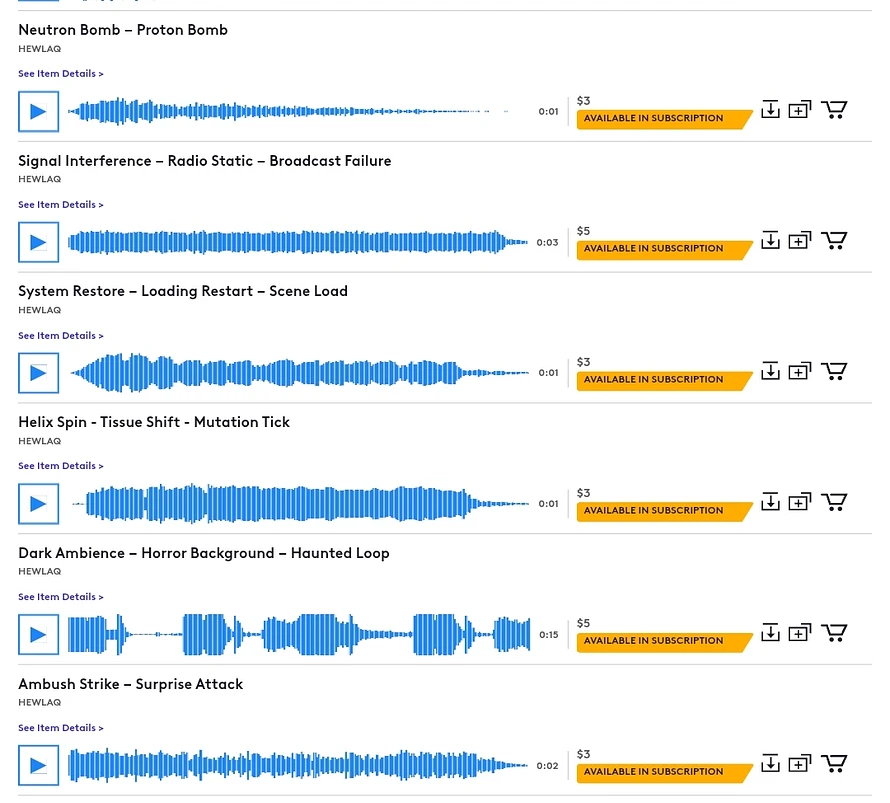
The main advantage of using a specialized collection is time. Your time is valuable. If you are a game developer on a deadline or a filmmaker deep in editing, you do not have hours to sort through hundreds of generic sound packs. You need to find the right audio quickly and know it will work immediately. At Hewlaq store, the sounds are pre-organized and tagged for these exact scenarios. You can search for "spaceship engine" or "digital glitch" and find a selection of files that are plug-in ready for your film, game, or motion graphics project. Each sound comes with a commercial license, so you can use it in your work right away without legal concerns.

Building Trust Through Consistent Quality

When you find a sound designer whose work you like, it changes your workflow. You have a source you can return to, a brand you can trust. Hewlaq store is built to be that reliable source. With a growing catalogue majorly focused entirely on this niche, the goal is to provide a consistent level of quality. Every file is delivered in high-resolution 48kHz/24-bit WAV format, so you have a clean, strong audio foundation for your mix. This technical reliability, combined with a focused creative style, means you know what you are getting. You are not buying a single sound; you are investing in a resource you can use for this project and the next one.

Sounds That Work Hard for Your Project

A good futuristic sound effect is adaptable. The same "interface beep" might work perfectly in a mobile game, a corporate presentation, or a YouTube video. The licensing through Pond5 is designed to support this flexible use. When you purchase a sound, you are free to use it across multiple media: commercials, interactive games, online content, without worrying about additional fees. This makes it a smart investment. You pay once and the sound can serve many purposes, giving you a much better return than commissioning a custom design or wasting time trying to create it yourself.

For your next project, consider what a difference the right audio can make. It is the element that can transform a good visual into a believable experience. If you are looking for sounds that are made specifically for science-fiction and futuristic projects, I invite you to visit the store.

You can browse the entire collection of futuristic sound effects on my Pond5 profile HERE.

Image Image

Let us have a straight talk about sound effects. It is tempting to search for free sounds online. I have done it. Everyone has. But after a project or two, you start to notice problems. The sound is fuzzy. It does not fit quite right. Or worse, you get a nervous feeling, wondering if you even have the right to use it.

It is actually building a foundation for your work that is solid and dependable. Getting your sounds from a proper, paid platform is an investment in your own creativity and peace of mind.


Benefits of downloading sound effects from legitimate platforms

There is always something called "License"

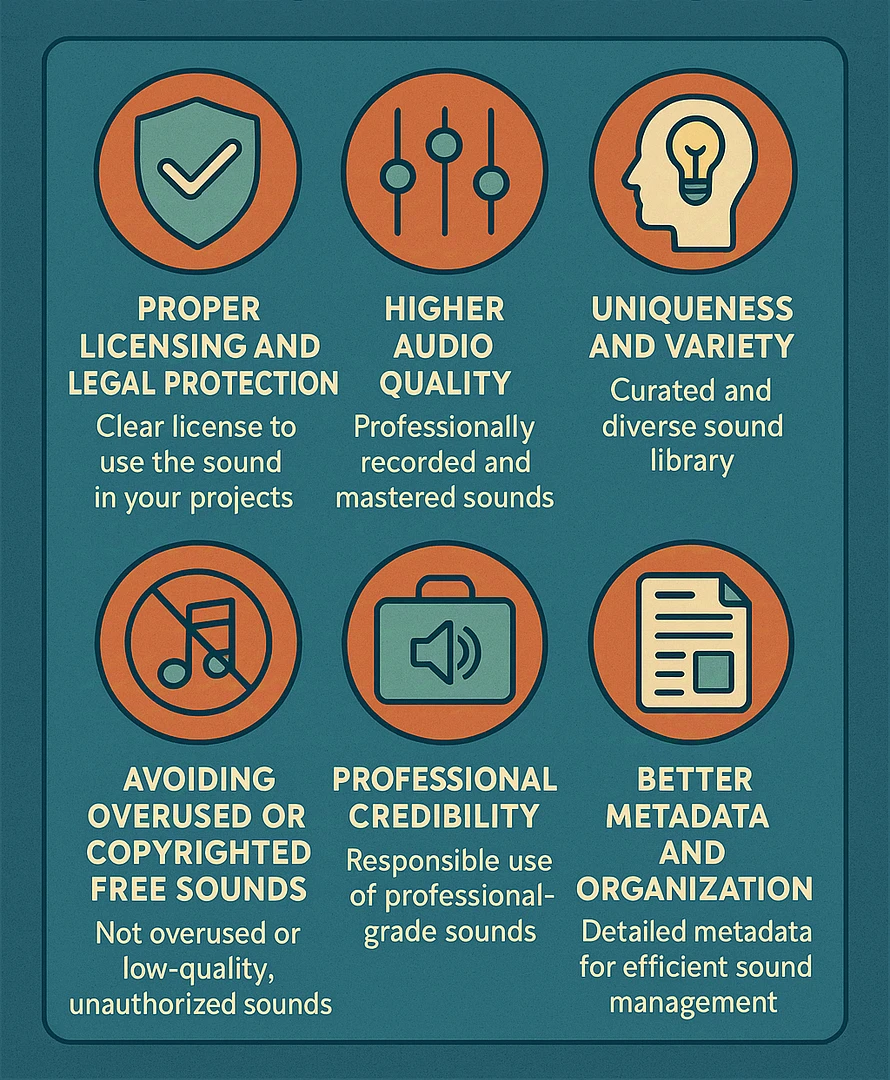
We have to talk about the law. When you download a sound from a legitimate marketplace, you are buying a clear license. This piece of paper, digital as it may be, is your shield. It protects you from the nightmare of a copyright claim that can take your video down or even get your channel in serious trouble. If a client or a platform asks for proof, you can show it to them. For any professional work, this is not a luxury; it is an absolute requirement.

Quality counts...

Then there is the simple matter of quality. Sounds from serious platforms are recorded and designed with good equipment. They are clean, they are strong, and they come in high-resolution formats. This means when you put them in your project, they sound clear and powerful. They have what engineers call "headroom," which gives you space to work with them in your mix without everything turning into a noisy mess. A free sound might seem okay on its own, but try to mix it, and its weaknesses become obvious.

Ordinary vs. extraordinary

Another point we do not consider enough is uniqueness. The internet is filled with the same ten free sounds, used over and over again. You hear them in countless videos, and it makes everything feel the same. Professional libraries are built by people who travel to unique places or spend hours designing something special from scratch. Using these sounds helps your project stand out with its own personality. It keeps your work from sounding generic.

This all ties directly into your professional reputation. Using high-quality, properly licensed sounds shows you care about the details. It tells clients and collaborators that you are serious and that your workflow is trustworthy. If you want to make money from your creations, this is a fundamental step. It proves you are a professional, not just a hobbyist.

Support, support, support!

We should also not forget the people who make these sounds. Your payment is what allows a field recordist to travel to a forest or a designer to buy a new synthesizer. You are supporting an artist, which means you are helping to ensure that more great sounds will be available for all of us in the future. It is a good cycle to be part of.

Free often means disorganized

It comes down to building a workflow you can count on. The right platform saves you time with organized files and good descriptions, so you are not searching for hours. It gives you confidence that your work is safe and sounds its best.

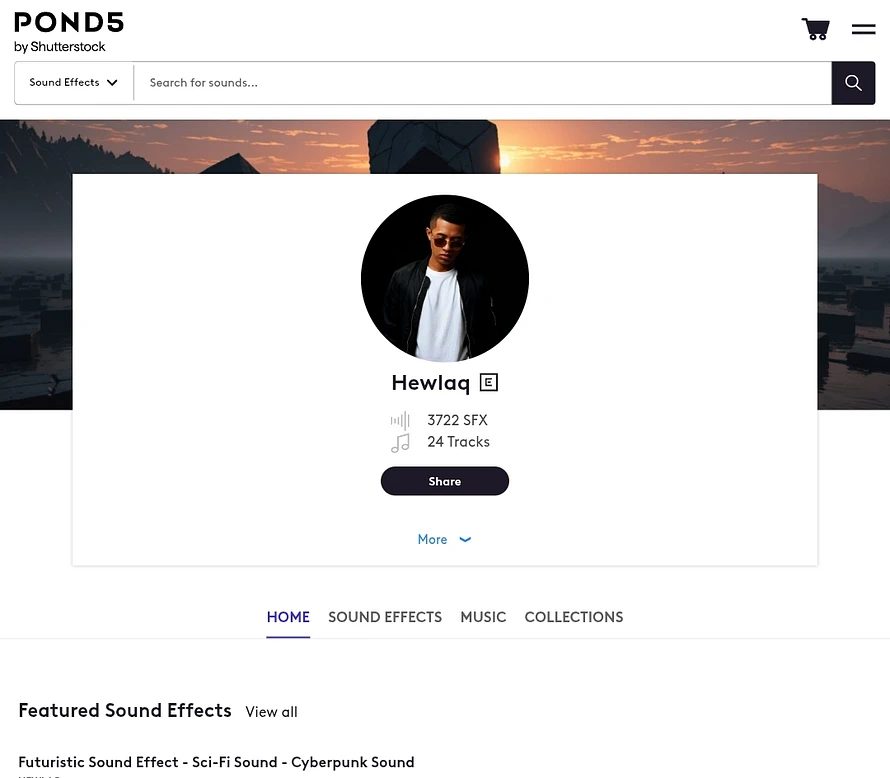
If you are ready to work with sounds that bring quality and legality to your projects, I invite you to explore the collection I have built on Pond5. You will find a range of professional sound effects designed to meet these exact standards.

You can find my profile and browse the available sounds HERE.


Image Image

You're working hard on your project—maybe it's a short film, a video game, a podcast intro, or a new app. You want it to feel special, to have its own personality. You get to the sound design and suddenly you hit a wall.

Every laser blast sounds like it's from the same movie. Every whoosh and click feels like you've heard it a hundred times before. It's frustrating. You know that great sound is half the magic. It's what makes a viewer lean in, a gamer feel the impact, or an app feel slick and modern. But finding a sound that's just right, one that doesn't sound like a generic stock effect, can feel like an impossible task.

"I opened up Hewlaq Official Pond5 Artist Store, a Shutterstock brand, because I was hitting that same wall."

So, I Do Things a Little Differently.

I don't just collect or lightly tweak sounds. I build them from absolute silence. My workshop is inside programs like Serum, Vital, and Sylenth1—think of them as incredibly deep and complex sound sculpting tools. I start with a raw wave and shape it, twist it, and bring it to life.

This means every sound in my Pond5 store has a unique fingerprint. That low, grumbling engine hum? I made it to sound powerful and a bit alien. Those glitchy, digital UI beeps? I designed them to feel futuristic but not cliché. You're getting sounds that come from a place of experimentation and a love for the weird and wonderful.

This Isn't Just for Creators...

Maybe you're on a different kind of creative journey. You could be building the next big thing in technology and need to teach a computer what "futuristic" or "mechanical" sounds like. For that, you need a clean, well-organized, and unique collection of sounds—a solid dataset for your AI to learn from.

My library is perfect for that. Every sound is carefully named and categorized. It's like giving a bright student a rich and varied vocabulary to learn from, instead of just a few simple words.

Your project, whatever it may be, deserves a signature sound. It deserves to stand out. Stop sifting through the same old samples and dig into a collection made with care and a focus on the unique.

Ready to find your sound?

>> Explore My Unique Sound Collection on Pond5 Here <<

Happy creating,

The sound-shaper at hewlaq.com

Image

Monsters are real.

Not under your bed, maybe, but definitely in movies, games, and that podcast your cousin won’t stop talking about.

Hi, I’m Hewlaq, a sound designer who’s spent the last decade making growls, howls, and unidentifiable screeches that’ll make your hair stand up. Monster sounds so raw; they’ll have you checking the closet before bed.

Why Monster Sounds Are Every Creator’s Secret Weapon

Monsters aren’t just for jump scares. They’re the heartbeat of tension in horror films, the “oh no” moment in video games, and the reason audiences lean closer. A great monster sound is a character. Think about the last time a movie creature made your spine tingle. Chances are, it wasn’t the CGI claws. It was the guttural rumble you felt in your teeth. That’s the magic we’re chasing.

Why My Sounds Don’t Sound Like Your Uncle’s Garage Band

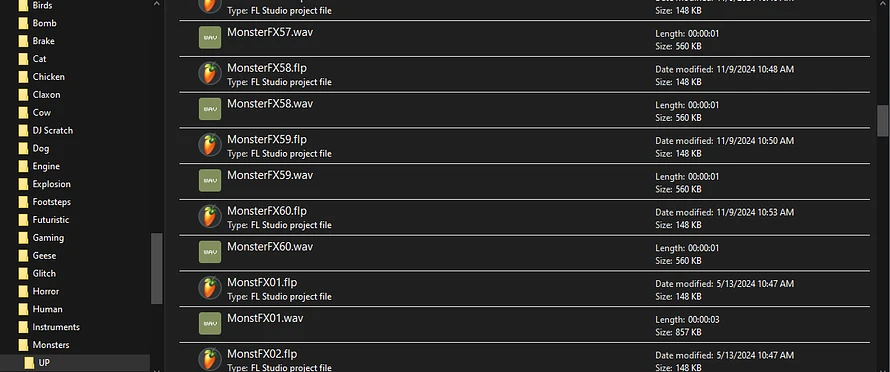
I don’t use samples. Or even presets, most days. Every growl, roar, and eerie whisper in my library comes from analog synthesizers (plugins)—the kind with knobs, and a bad habit of shocking me when I forget to ground them. These virtual machines are finicky, unpredictable, and glorious. Because they’re analog, no two sounds are identical. That demonic purr you hear is a one-of-a-kind recipe of oscillators, filters, and my questionable life choices during a 3 a.m. recording session.

How to make Monster sound effects with analog synthesizers

Where These Sounds Come Alive

Imagine an indie game developer using my “Swamp Beast Howl” to make players drop their controllers. Or a haunted house team syncing my “Alien Hive Drones” to a flickering light. I’ve even had a baker use my “Ghostly Wail” in a Halloween cookie ad (true story—those cookies sold out). These sounds aren’t just for “scary” projects. Throw a distorted growl under a corporate training video, and suddenly, compliance guidelines feel way more intense.

“Wait, you made that noise?!”–Happy Clients

A filmmaker once emailed me, “Used your ‘Dragon’s Cough’ sound in my short film. The lead actor thought we’d mic’d up an actual bear. We didn’t correct him.” Another client, a game developer, joked that my “Robot Zombie Chitter” caused their playtesters to develop a new phobia of ceiling vents. My favorite? A teacher who used my “Gentle Giant Whimper” to teach kids about empathy. Monsters have layers, people.

How to Grab These Sounds (Without Summoning Actual Demons)

  • Head to my Pond5 "Monsters" section here.
  • Browse the growls, clicks, and things that go thump in the night (Pro tip: don’t do this at 2 a.m. with headphones on.)
  • Download the ones that make your project’s hair stand on end.
  • Blame me when your audience starts sleeping with the lights on.

Monster Sound Effects by Hewlaq on Pond5

Go Make Something Unforgettable

Monster sounds are more than background noise—they’re the secret sauce that turns “meh” into “WHAT WAS THAT?!” Whether you’re crafting a game, film, or experimental polka album, my analog synth creations are here to add a little chaos. Refer to the collection, and remember: if your neighbors hear growling through the walls, tell them it’s just the microwave.

Click here to raid the monster vault. (No actual microwaves were harmed in the making of these sounds.)